Case File · No. 05Genuinely open (in part)

Lights, Waves & Lost Tapes.

A thousand years of strange lights on the Moon, the lunar wave, and the tapes NASA really did erase.

First report · 1178 Catalogued events · 579 Updated · July 2026
Fig. 0 — June 18, 1178: the night the Moon caught fire, as Canterbury remembered it. Reconstruction.
The first report · June 18, 1178

The night the Moon caught fire.

On the evening of June 18, 1178, five men were watching the sky over Canterbury. They were monks, which matters: sober, literate, and answerable to a chronicler named Gervase who wrote down only what witnesses would swear to. What they swore to was this. The new Moon hung thin in the west when the upper horn suddenly split in two. From the split, Gervase records, sprang "a flaming torch, spewing out, over a considerable distance, fire, hot coals and sparks." The body of the Moon writhed "like a wounded snake," then recovered — then did it again, a dozen times or more, before going dark along its whole length.

For eight hundred years the entry sat in the chronicle as a curiosity. Then, in 1976, the geophysicist Jack Hartung made a thrilling suggestion: the monks had watched, live, the impact that gouged out Giordano Bruno — a conspicuously young, bright-rayed crater sitting almost exactly where the upper horn of a June crescent would be. Five medieval monks, the only humans ever to witness the birth of a lunar crater. It is one of the great romantic hypotheses in planetary science, and it very nearly survives contact with the evidence.

Nearly. In 2001, Paul Withers ran the numbers and found the catch: an impact big enough to make Giordano Bruno would have hurled millions of tonnes of debris toward Earth, igniting a week-long meteor storm — thousands of fireballs an hour, visible across the entire planet. Nobody, in any chronicle, in any country, recorded one. The likelier story is smaller and stranger: a bright meteor breaking up in Earth's atmosphere, directly along the monks' line of sight to the Moon — an alignment that made a nearby explosion look like lunar catastrophe.

Five honest witnesses, one true report, and a Moon that did nothing at all. Honest witness, real observation, wrong Moon.

Hold onto that shape, because this entire case file is variations on the theme — and note that even this opening exhibit's verdict is itself contested, Hartung's partisans unconvinced to this day. Here the claims stop being about ancient towers and start being about things people have actually seen, filmed, and recorded. Which makes this the corner of the site where the verdicts get interesting.

Exhibit A

Five centuries of lights — the catalogue NASA published.
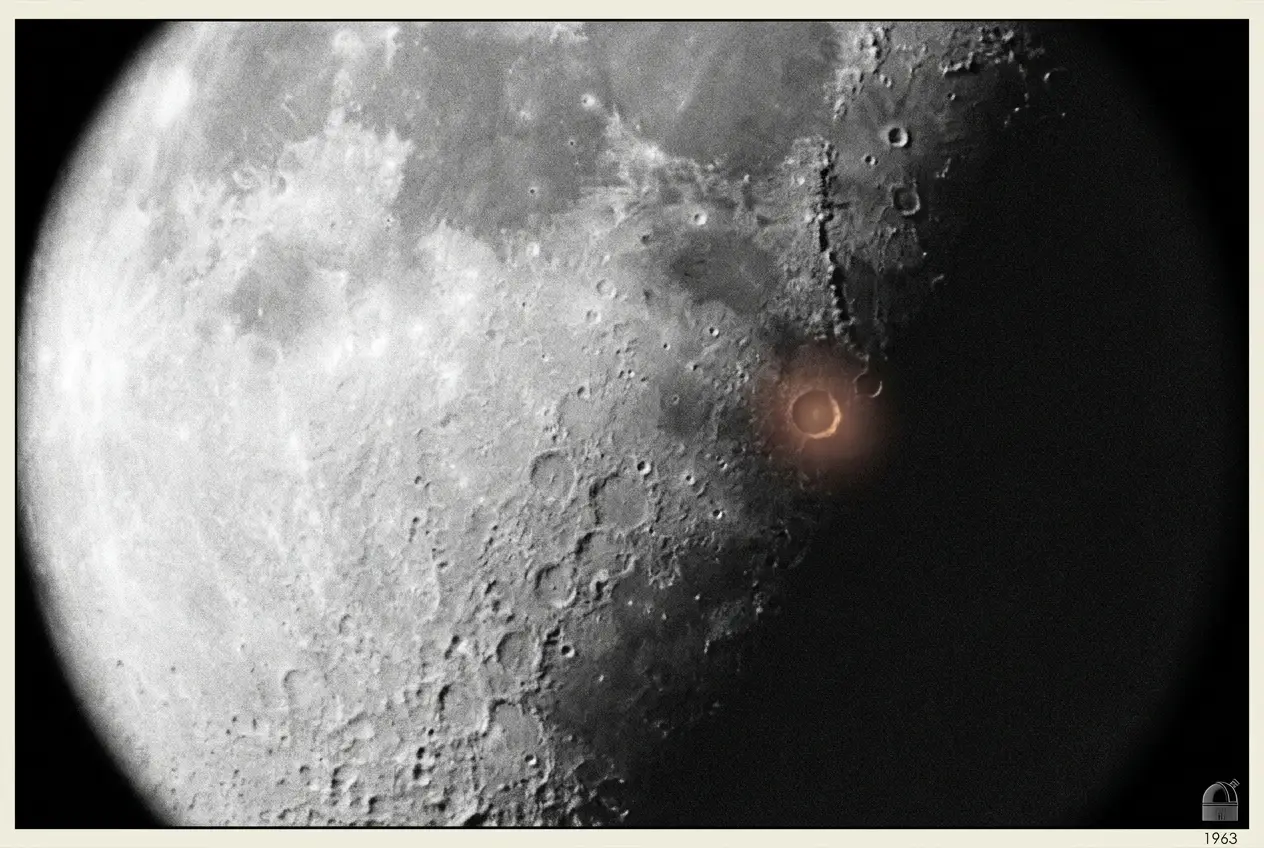
The crater Aristarchus glowing with a faint red-pink luminescence against the grey lunar surface
Fig. 1 — Aristarchus, misbehaving again — roughly a third of all reports point at one crater. Reconstruction.

The catalogue. Here is a sentence conspiracy sites love, and it has the rare distinction of being true: NASA published an official technical report cataloguing 579 anomalous events on the Moon. It exists — NASA Technical Report R-277, the Chronological Catalog of Reported Lunar Events, compiled in 1968 by Barbara Middlehurst, Patrick Moore and colleagues, covering 1540 to 1967: five centuries of astronomers reporting glows, mists, flashes, and colour changes on a world that is supposed to be geologically dead. The phenomenon even has a respectable name: Transient Lunar Phenomena, TLP. And the reports are not evenly scattered — one feature, Aristarchus, the brightest crater on the Moon, accounts for roughly a third of everything in the catalogue.

The witnesses. James Greenacre and Edward Barr were not enthusiasts with department-store telescopes. They were professional cartographers on the US Air Force's lunar mapping project at Lowell Observatory — arguably the two people on Earth most familiar with exactly how Aristarchus was supposed to look. On October 29, 1963, both men independently watched red-pink glows brighten near the crater, shift, and fade; a month later they saw it again, with a corroborating observer at another telescope. Sixty years on, it remains the most credentialled TLP observation ever made. And in 1958, the Soviet astronomer Nikolai Kozyrev caught the crater Alphonsus blurring and reddening — with a spectrograph running. His plate, which he read as carbon-gas emission, remains the closest TLP has come to leaving a fingerprint: contested, unrepeated, but a measurement rather than a memory.

"Considerably more illuminated than the surrounding area… it seems to have a slight amount of fluorescence."

— Neil Armstrong, reporting on Aristarchus at Houston's request, July 19, 1969. A genuine transcript.

The night before the landing, Houston passed Apollo 11 a request: an amateur astronomer had reported activity at — of course — Aristarchus, and would the crew mind taking a look? What Armstrong actually reported was an unusual glow he couldn't confidently explain, seen for a few moments at ground control's request. In the conspiracy retellings, that becomes a fusion reactor, a powered dome, a beacon. The transcript is both much less and considerably more interesting.
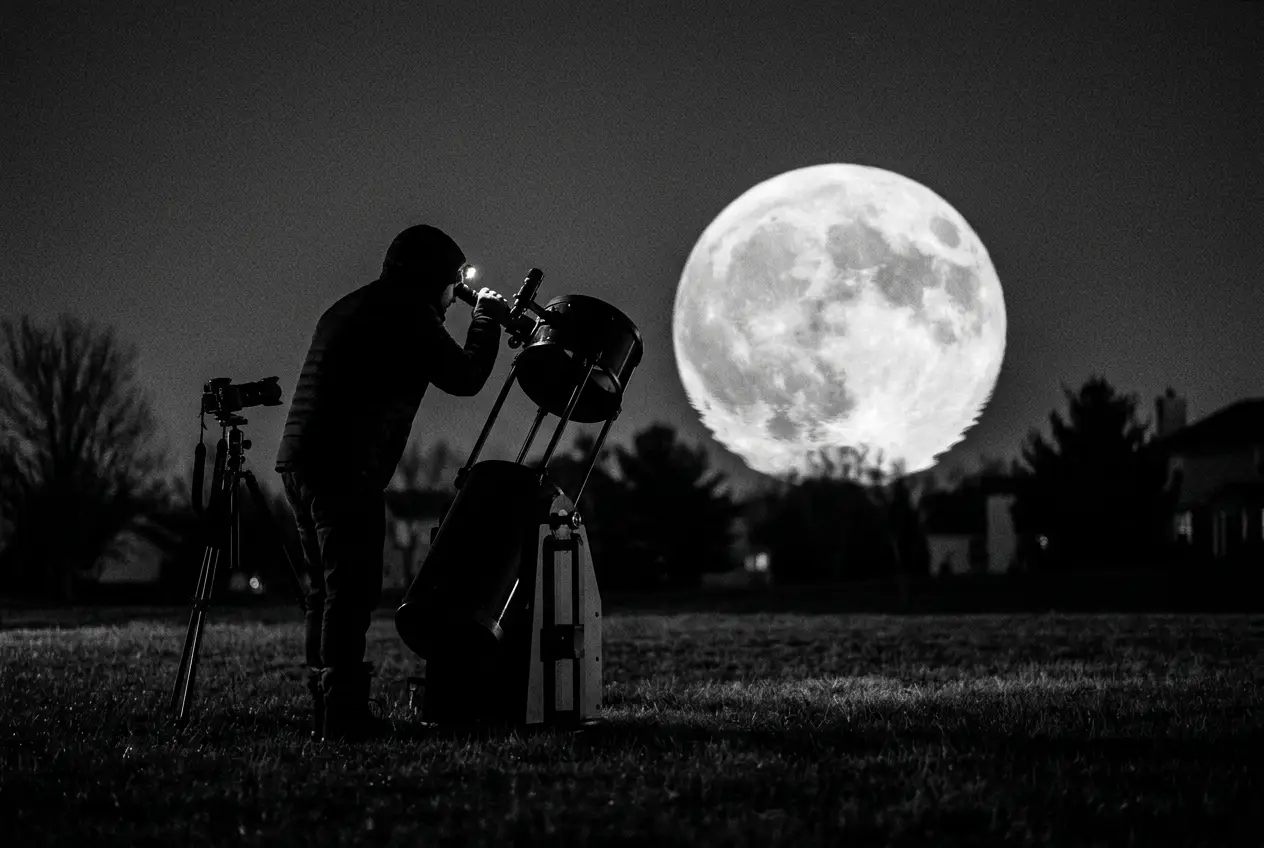
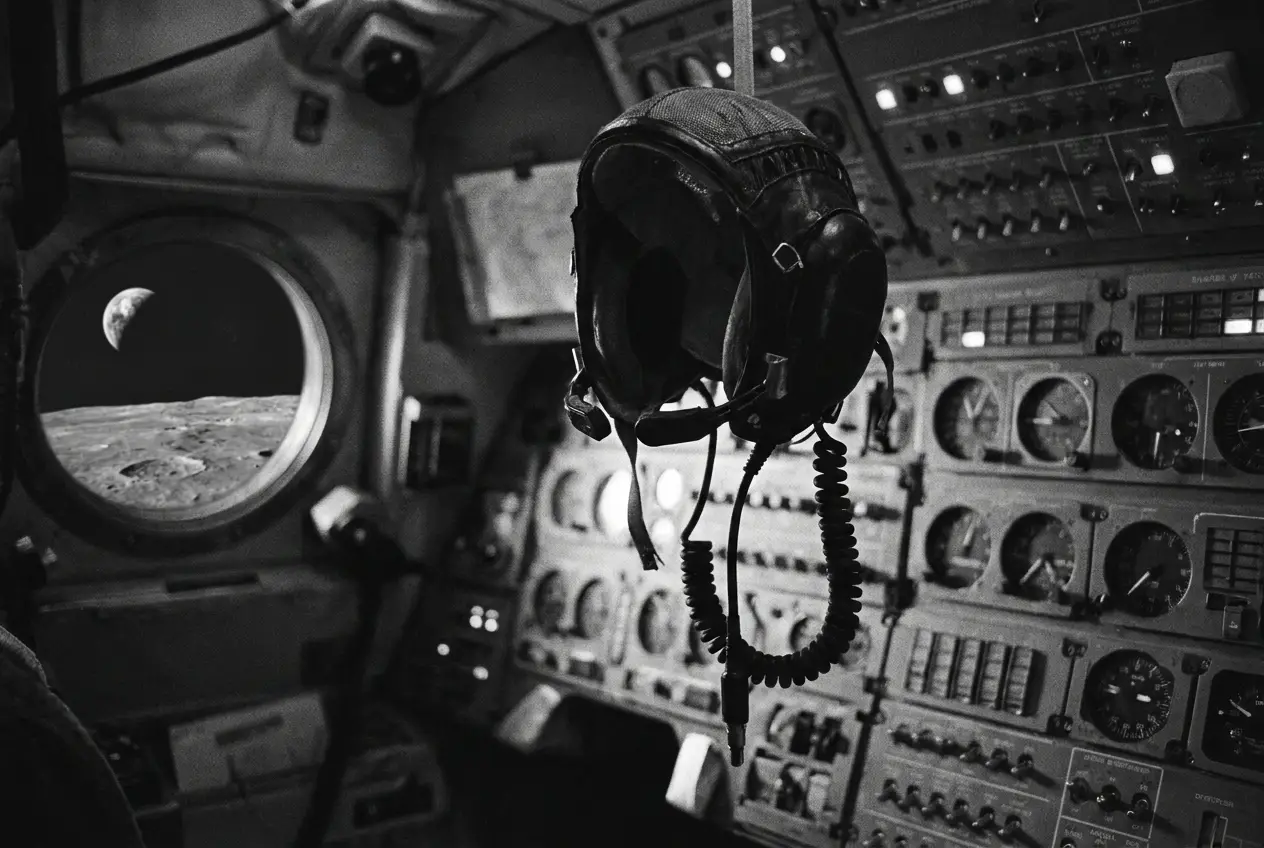
Exhibit B

What the Moon is actually doing.

So: five hundred years of reports, some from the best-qualified observers alive, one spectrogram, one transcript with Armstrong's voice on it. What does the science say? More than you might expect — and this is the part the debunk blogs undersell. The Moon, it turns out, is not perfectly dead, and several TLP mechanisms are no longer hypotheses but observations.

The Moon leaks. Radon-222, a radioactive gas produced by uranium decay in lunar rock, seeps out of the interior — and it has been directly detected, by alpha-particle spectrometers on Apollo 15 and 16 and again by Lunar Prospector in the late 1990s. The detections cluster at a handful of sites, and the strongest is — once again — Aristarchus. A burp of escaping gas could loft fine dust and briefly change how the surface scatters sunlight: a glow, a mist, an obscuration — exactly the vocabulary of the old catalogue.

The Moon gets hit — constantly, and now on camera. Meteoroid impact flashes, once a fringe explanation, are today filmed routinely by monitoring programs; hundreds are on record, and a 2013 strike in Mare Imbrium was bright enough to see with the naked eye. The Moon's dust may fly: the Surveyor landers photographed a faint "horizon glow" after local sunset — light scattered by dust apparently levitated electrostatically along the terminator. And the observer's own sky lies: most TLP reports are single-observer, small-telescope, made through turbulent air that splashes spurious colour along bright crater rims — and TLP reports cluster after publicity about TLP, which is not how geology behaves.

The honest ledger, then. Most of the 579 events were atmosphere, optics, and eagerness. A slice were real impact flashes. And a residue — the Aristarchus radon correlation, Greenacre and Barr, Kozyrev's plate — sits in the unresolved middle: real observations, plausible mechanism, no smoking gun connecting them.

Status Mostly Explained-but-Interesting — with the Aristarchus outgassing residue Genuinely Open.
This site's rarest verdict

Most reports are the observer. A residue is the Moon.

This site hands out its rarest verdict sparingly: an observed cause — detected radon, peaking at the single most-reported location on the Moon — paired with credentialled sightings that still lack a confirmed explanation. Here, it is earned.

Genuinely open
Exhibit C

The wave — is the Moon a projection?

A telescope view of the Moon with a horizontal ripple distortion sweeping across the disc
Fig. 2 — The "lunar wave": a ripple that lives in the air above the camera, not on the Moon. Reconstruction.

The claim. From the file's most defensible mystery to its most audacious. Since around 2012, a Los Angeles camera operator posting as Crrow777 has published telescope footage of what he calls the "lunar wave": a horizontal ripple sweeping across the face of the Moon like a refresh line on an old monitor. His interpretation is exactly as large as it sounds — the wave is a hologram glitching, and the Moon we see is a projection concealing whatever is really there. Give the claim its due, as we do for every claim on this site: Crrow777 shoots with genuinely high-end gear; the waves are really in the footage, not pixel-hunted from a compressed JPEG; and other viewers have independently filmed similar ripples.

The explanation. The answer is unusually clean. The lunar wave is what Earth's atmosphere does to a long telephoto shot: drifting refraction cells produce exactly this travelling shimmer, and the camera adds its own — rolling shutter, interlacing, compression — until the distortion organizes into a coherent-looking sweep. Identical "waves" appear in long-range footage of mountaintops, skylines and ships at sea, none of which are generally held to be holograms. Add the physical Moon's inconvenient habits — returning laser pulses from the Apollo retroreflectors, occulting stars on schedule worldwide, casting a solid shadow during eclipses, hauling the oceans up twice a day, being repeatedly orbited, landed on, and driven over — and the verdict writes itself.

Status Resolved — every wave ever filmed has been filmed alone.
Exhibit D

The music on the far side.

An Apollo-era communications headset floating in a dim spacecraft cabin
Fig. 3 — May 1969: the whistle in the headsets, out of contact with every human being alive. Reconstruction.

The claim. In May 1969, Apollo 10 swung behind the Moon — out of radio contact with every human being alive — and the onboard recorder caught the crew reacting to an eerie, keening whistle in their headsets. "That music even sounds outer-spacey, doesn't it? You hear that? That whistling sound? Whooooo!" And then the exchange no thriller screenwriter would dare invent: "Shall we tell them about it?" — "I don't know. We ought to think about it." When the audio featured in a Science Channel episode in February 2016, the coverage wrote itself: hidden for four decades, only now declassified, astronauts sworn to silence about the music on the far side.

The explanation. Almost none of that framing survives a library visit. The transcripts were declassified and publicly filed in 1973 — sitting in the National Archives for forty-three years, suppressed by nothing more sinister than the fact that nobody had looked. The sound was a heterodyne whistle: interference between the lunar module's and command module's VHF radios when both were on, a phenomenon the radio engineers knew well. The clincher comes from Michael Collins, who heard the identical "eerie woo-woo sound" while alone behind the Moon on Apollo 11 and wrote about it openly in Carrying the Fire — the technicians had a ready explanation, and he was glad he'd been warned, "because otherwise it would have scared hell out of me." As for "shall we tell them about it" — a Cold War flight crew wary of a "spooked astronauts" headline told them anyway. It's in the transcript. That's how we know.

Status Explained-but-Interesting — public since 1973, explained in print by 1974.

Records that were merely obscure get retold as records that were suppressed.

Exhibit E

The tapes NASA really did erase.

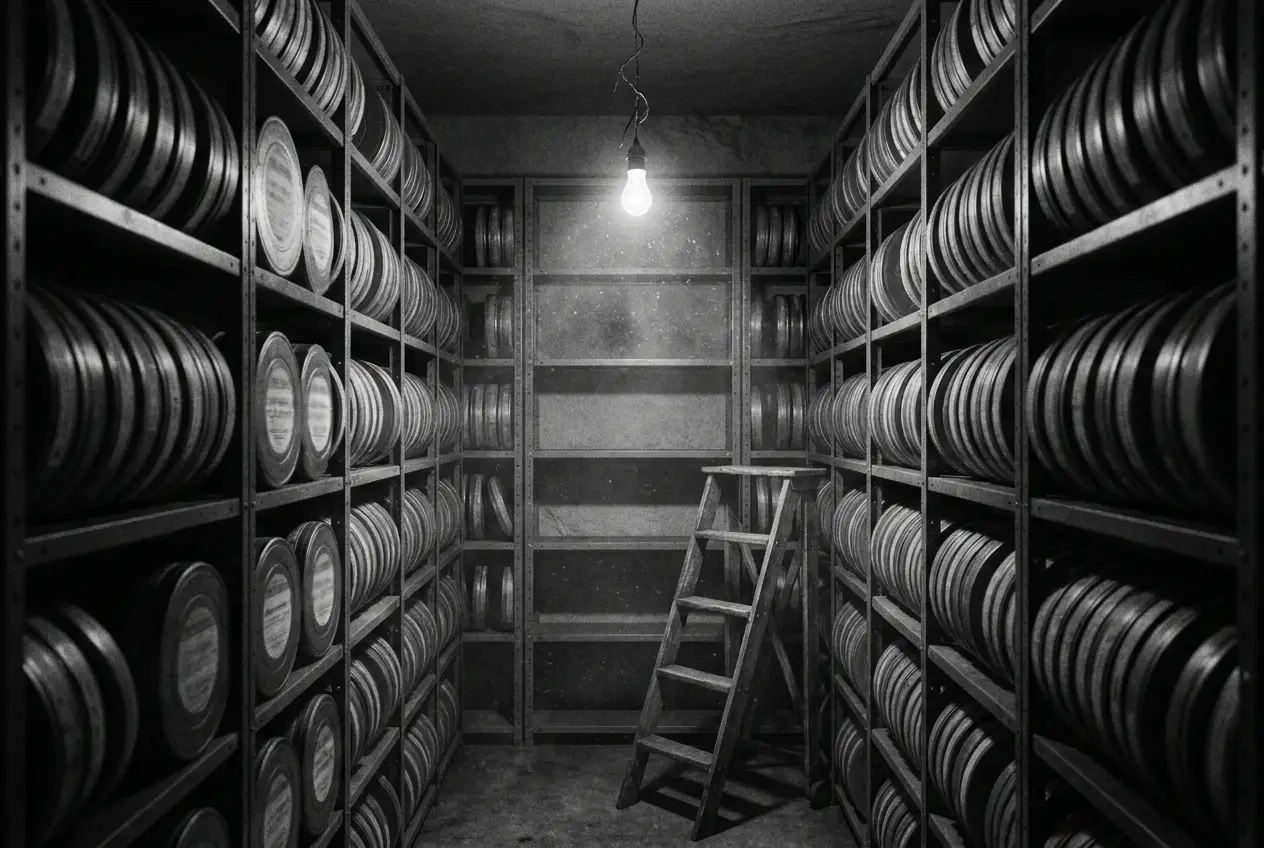
Racks of aging magnetic telemetry tape reels in a government storage room
Fig. 4 — Telemetry reels, early 1980s: the tape shortage that ate the moonwalk. Reconstruction.

The claim. This is the one that stings, because here the loss is real. The original slow-scan television tapes of the Apollo 11 moonwalk — the raw, high-quality signal from the Moon, before it was degraded for broadcast — are gone. After a multi-year search, NASA concluded in 2009 that the telemetry reels had almost certainly been erased and reused in the early 1980s during an agency-wide magnetic tape shortage. NPR's headline remains unbeatable: "Houston, We Erased The Apollo 11 Tapes." The conspiracy framing is obvious and, for once, emotionally understandable — destroying the primary record of humanity's greatest moment is either negligence beyond belief or evidence disposal.

The explanation. The mundane reading: the tapes held telemetry with video embedded in a format only extinct equipment could play; the video content survives in broadcast recordings from multiple ground stations, since restored in 2009; and to 1970s NASA, magnetic tape was a commodity, bought by the thousand and recycled by policy. The agency that supposedly executed history's most airtight cover-up could not, on this evidence, reliably operate a filing cabinet — a point the hoax theory and the suppression theory both have to walk past with their eyes down.

Status Explained-but-Interesting — the erasure is real; the suppression is manufactured.
Exhibit F

The exhibit index.

"Fire, hot coals and sparks."

The 1178 horn. Gervase's monks told the truth about what they saw; Hartung read it as the birth of crater Giordano Bruno, Withers as a foreground meteor along their line of sight. No global meteor storm was ever chronicled — but the romantic hypothesis refuses to fully die. A first exhibit whose verdict is itself contested.

Contested · two readings
"A slight amount of fluorescence."

The Aristarchus residue. A third of 579 catalogued events, the most credentialled observers of their day, one contested spectrogram, and radon-222 actually detected — peaking at the same crater. Real observations, plausible mechanism, no smoking gun connecting them. The five-century watch is still hiring.

Genuinely open
"That music even sounds outer-spacey, doesn't it?"

The far-side music. A real recording, a real "shall we tell them about it" — filed publicly in 1973, ignored for forty-three years, then reborn as a declassified secret in 2016. VHF heterodyne interference, described in print by Michael Collins the following decade.

Explained · VHF heterodyne
The verdict · Case File 05

Run the thread back to Canterbury. Five monks told the truth about what they saw and were wrong about what it meant. Greenacre and Barr, the best lunar observers of their day, saw something at Aristarchus that still lacks a confirmed cause. Armstrong reported a glow he couldn't name, on the record, to the whole planet. A camera operator filmed the atmosphere and mistook it for the Moon. And two sets of tapes — one never hidden, one carelessly destroyed — were retold as two acts of suppression.

So the verdict splits, honestly. The wave is resolved. The tape mysteries are explained. The lights are mostly explained — and a residue, instrumented and located, is not. Wait for a night when the terminator falls near Aristarchus, and look. The catalogue is still open.

The Moon's real anomalies survive daylight. The manufactured ones need the dark.

Case open · In part
The reading room

Go deeper — then go look.

Free primary source: NASA Technical Report R-277 — Chronological Catalog of Reported Lunar Events (Middlehurst, Moore et al., 1968), online in full. The genuinely real catalogue behind the lore: 579 events, 1540–1967.

Sources & provenance for this case file

The Canterbury event: Gervase of Canterbury, chronicle entry for June 18, 1178; Hartung (1976), Meteoritics; Withers (2001), Meteoritics & Planetary Science — via education.nationalgeographic.org. TLP catalogue and witnesses: NASA Technical Report R-277 (Middlehurst, Moore et al., 1968); Greenacre/Barr and Kozyrev accounts via Wikipedia ("Transient lunar phenomenon") and boingboing.net. Apollo 11 Aristarchus observation: NASA Apollo Flight Journal air-to-ground transcript, July 19, 1969. Radon detections: Apollo 15/16 alpha-particle spectrometer and Lunar Prospector mission literature. Lunar wave and rebuttals: cloudynights.com; rationalwiki.org ("Holography"). Apollo 10 "music": smithsonianmag.com; space.com; Collins, Carrying the Fire (1974). Apollo 11 missing tapes: npr.org ("Houston, We Erased The Apollo 11 Tapes," 2009); Wikipedia ("Apollo 11 missing tapes"). Mission facts current as of July 2026. Images on this page are AI-generated reconstructions, labelled as such — not archival photographs.

The verdict awaits

The Great Moon Debate →